



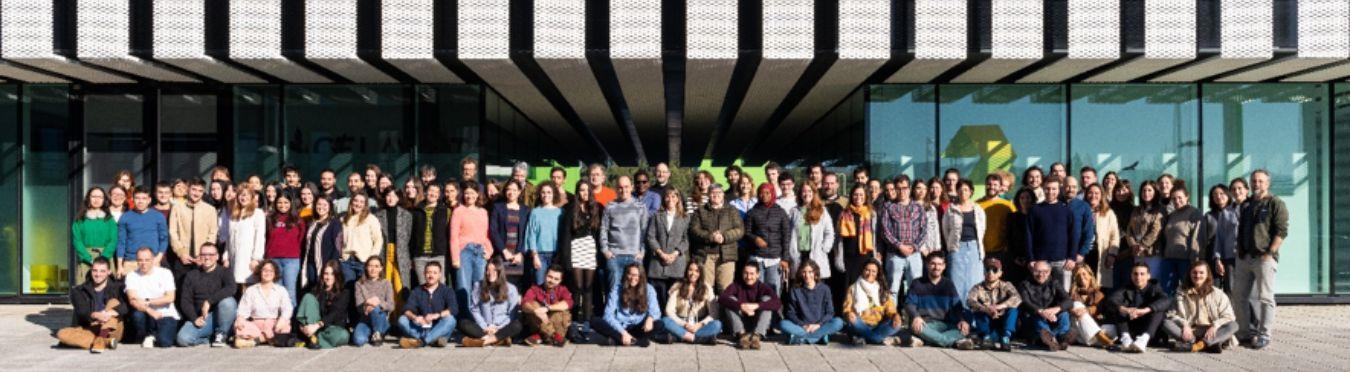

BC3 en el Campus Científico de la Universidad del País Vasco (EHU), en Leioa
BC3 Basque Centre for Climate Change es un centro BERC (Basque Excellence Research Centre) de la Red Vasca de Ciencia, Tecnología e Innovación que inició su andadura en 2008. Acreditado como “Unidad de Excelencia María de Maeztu” desde 2018, el BC3 cuenta actualmente con más de 130 empleados y empleadas de 18 nacionalidades, 26 proyectos europeos y buenos resultados en atracción de talento (4 ERC, 7 MSCA). Su objetivo es fomentar la coproducción de conocimiento relevante para la toma de decisiones, integrando las dimensiones ambientales, socioeconómicas y éticas del cambio climático. El BC3 colabora con más de 170 organizaciones y centros de investigación a nivel internacional en más de 60 países.
Algunos hitos científicos recientes del BC3
Support of climate policies at a national level with innovative modelling approaches
Development of the methodological approach and assessment of the socio-economic impacts of the National Energy and Climate Plan 2030 (NECP 2030), its update in 2023, its long-term plan for 2050, and the specific measures deployed until now, including addressing just transitions. The National Energy and Climate Plans (NECP) represent the central element of the climate policies of the EU Member States. The Spanish NECP defines the main actions to achieve the objectives of reducing GHG emissions, renewable energy and energy efficiency.
Long-term impact: The NECP pursues a 23% reduction in greenhouse gas (GHG) emissions by 2030 compared to 1990. This reduction objective involves eliminating one in every three tons of greenhouse gases currently emitted.
Data and knowledge interoperability at the core of supporting science-based and environmentally sound decision-making at global and national levels
The UN ARIES for SEEA Sector hub launched in November 2022 and the subsequent organisation of the 8th International Conference on Big Data and Data Science for Official Statistics: Informing Climate Change and Sustainable Development Policies with Integrated Data in June 2024. The UN Committee of Experts on Big Data and Data Science for Official Statistics (UN-CEBD) created the UN Global Platform with four regional hubs around the globe. The aim was to achieve a collaborative environment to work as a global statistical community. Along with it, the Sector Hub of ARIES for SEEA was created for the same purpose, and it is set to report to the UN-CEBD and collaborate on the UN Global Platform. On the other hand, the 8th UN Big Data Conference was held in Bilbao between June 10 and 14 under the title "Informing Climate Change and Sustainable Development Policies with Integrated Data". The organization fell to BC3 as the main driver of the event thanks to its leadership of the ARIES Project (https://aries.integratedmodelling.org/).
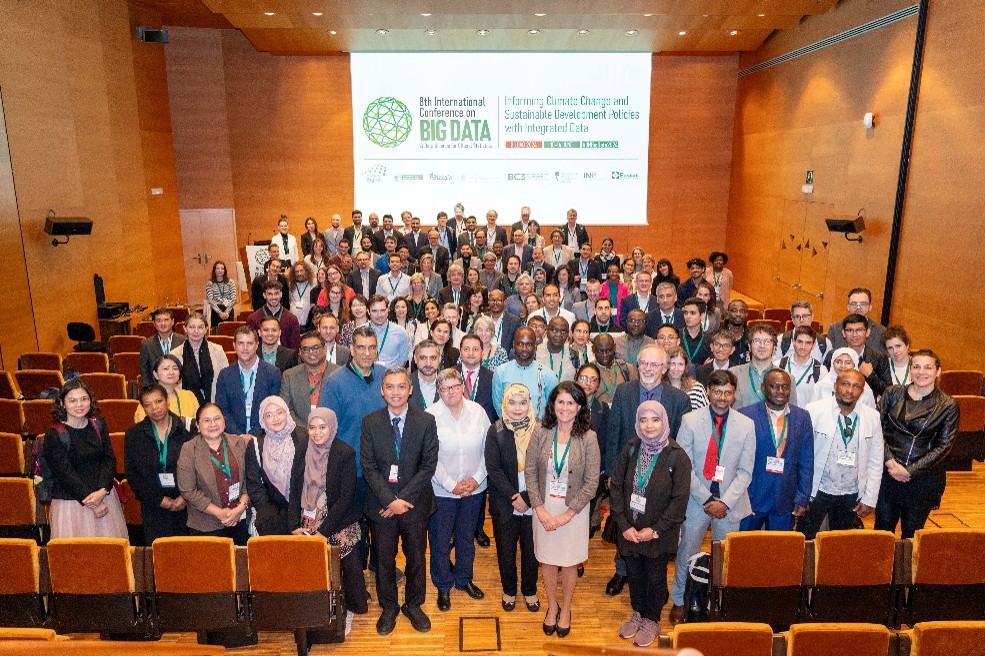
Long-term impact: The primary aim of this technology is to connect data and models from diverse institutions and agencies in the coming years. Since its launch, the Sector Hub has worked on expanding the knowledge, technology, innovation and functionality behind the ARIES for SEEA application by supporting collaborative project activities all over the world.
UN ARIES for SEEA Sector Hub link: https://unstats.un.org/bigdata/hubs/spain/
UN Big Data 2024 Conference link: https://unstats.un.org/bigdata/events/2024/conference/
Policy relevance at a global level
BC3’s scientific director María José Sanz was elected member of the IPCC’s Task Force Bureau on National Greenhouse Gas Inventories (TFI) for the Seventh Assessment Cycle in July 2023. Dr Sanz is the second Spaniard to form part of the IPCC Bureau. The IPCC was created in 1988 to facilitate comprehensive assessments of the state of scientific, technical, and socioeconomic knowledge about climate change, its causes, potential impacts, and response strategies. Since the beginning of its work in 1988, the IPCC has produced five assessment reports consisting of several volumes. Now begins its seventh evaluation cycle.
Medium-term impact: The Seventh Assessment Cycle lasts 5-7 years.